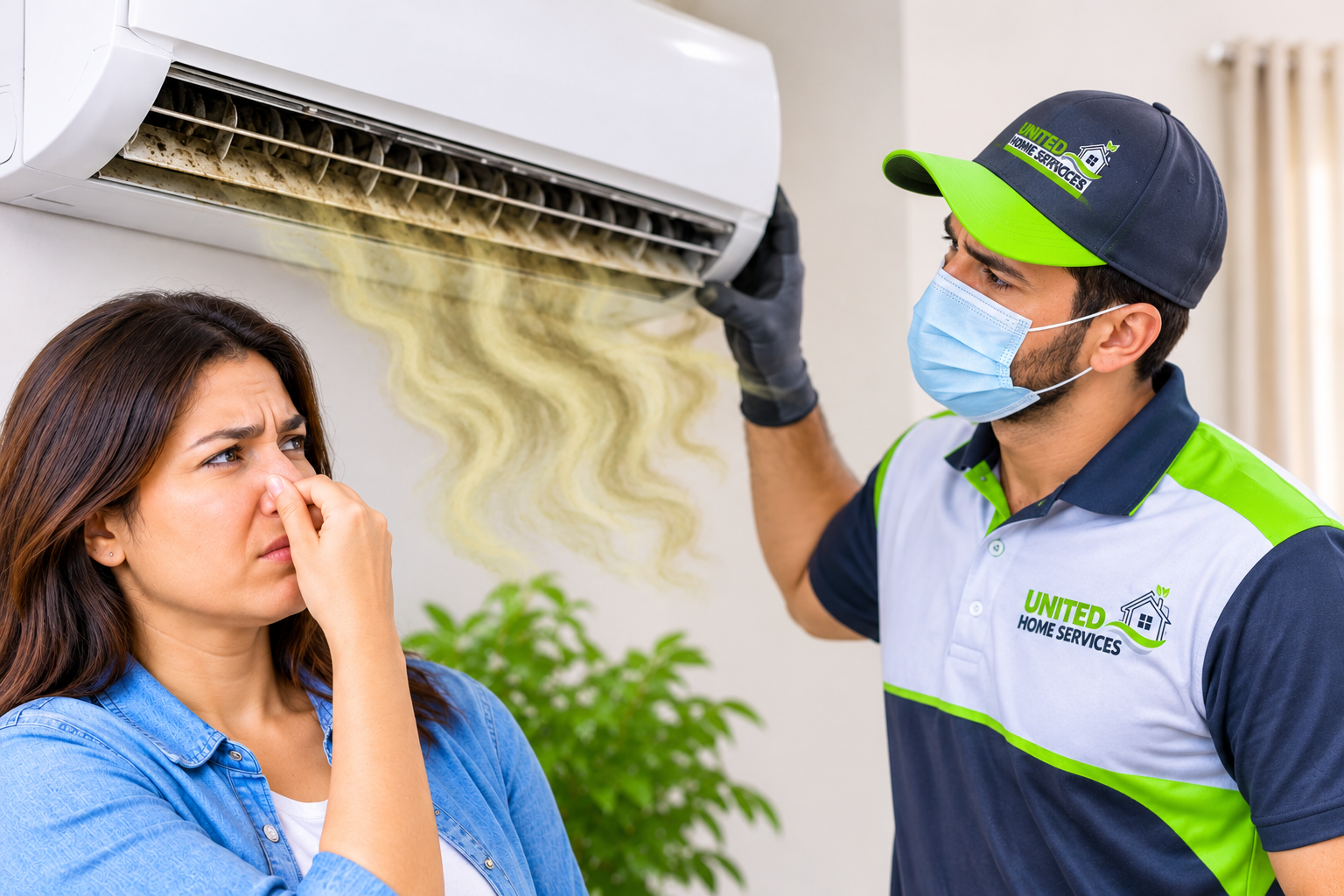

You turn on your air conditioner on a hot day, and instead of cool, fresh air, you get a damp, stale odor. If your AC smells musty, you are not alone, and the smell is usually a sign that moisture, dust, or mold has built up somewhere in your system. At United Home Services, we help homeowners across the Dallas-Fort Worth area track down the source of these odors. In this guide, we explain why an air conditioner smells musty when it turns on, how to find the cause, and what you can do to fix it.
Why Does the Smell Appear When the AC Turns On?
When your system is off, moisture can sit on the coil, in the drain pan, and inside ductwork. Dust and organic debris mix with that dampness, and microbes begin to grow. The moment the blower starts, it pushes air across those surfaces and sends the odor through your vents. That is why the smell is often strongest in the first few minutes of a cooling cycle and may fade after a while.
Common Causes of a Musty AC Smell
1. Mold or Mildew on the Evaporator Coil
The evaporator coil gets cold and wet as it removes humidity from your air. That damp surface collects dust, which gives mold and mildew a place to grow. This is one of the most common reasons for a musty smell.
2. Clogged Condensate Drain Line
Your AC produces water as it cools, and the condensate drain line carries it away. If the line clogs with algae or sludge, water backs up and sits in the drain pan. Standing water breeds bacteria and mold and creates a strong, swampy odor. A full drain pan can also overflow and cause water damage.
3. Dirty or Clogged Air Filter
A filter loaded with dust, pet dander, and moisture can hold odors and even grow mold. It also restricts airflow, which makes the system work harder and can lead to other moisture problems.
4. Dirty Air Ducts
Dust and debris inside ductwork absorb humidity and trap odors. In humid climates like North Texas, ducts can develop mold when moisture is present. If the smell comes from several vents instead of one, the ducts are a likely suspect.
5. High Indoor Humidity
When indoor humidity stays high, mold finds it easier to grow on surfaces inside and around your system. An oversized AC that cools quickly and shuts off before removing enough moisture can create this exact problem.
6. Leaky Ducts in Humid Spaces
Leaks in ducts that run through attics or crawl spaces can pull in humid, dusty air from those areas. That air can carry a musty smell straight into your home.
7. Dirty Sock Syndrome in Heat Pumps
If you have a heat pump, switching between heating and cooling can leave moisture on the coil. Bacteria can grow there and produce an odor that smells like old socks or damp laundry.
8. Water Damage or Mold Elsewhere in the Home
Sometimes the AC is only spreading a smell that starts somewhere else. Hidden leaks, wet insulation, or mold in a wall or basement can send odors into the system, which then distributes them throughout your home.
How to Find the Source of the Smell
Try these simple checks:
- Check the filter. If it looks gray, damp, or smells bad, replace it.
- Look at the drain pan and line. Standing water or slime is a warning sign.
- Compare vents. A smell from one vent suggests a local problem. A smell from all vents points to the coil, drain pan, or main ducts.
- Notice timing. A smell only at startup often means moisture is sitting in the system when it is off.
- Check humidity. An inexpensive hygrometer shows if your indoor humidity is staying high.
Solutions: How to Get Rid of the Musty Smell
Replace the Air Filter
Start with the easiest fix. Install a clean filter and replace it every one to three months, depending on your home and the filter type.
Clear the Condensate Drain Line
Pour a cup of distilled white vinegar into the drain line access to help break up algae and slime. Never mix vinegar with bleach or other chemicals. If water still does not drain, call a technician to clear the clog.
Clean the Drain Pan and Coil
Mold on the coil and drain pan is hard to remove safely without the right tools. A trained technician can clean these parts without damaging delicate fins.
Schedule Professional Air Duct Cleaning
If the odor comes from your ducts, professional air duct cleaning can remove the dust, debris, and buildup that hold odors and feed microbial growth. Technicians can also inspect the system for moisture and mildew while they work.
Control Indoor Humidity
Keep indoor humidity roughly between 30 and 50 percent. Use bathroom and kitchen exhaust fans, fix leaks promptly, and consider a whole-home dehumidifier if your home stays damp. Set the thermostat fan to “auto” so moisture on the coil can drain instead of being blown back into the house.
Seal Duct Leaks
Sealing leaks with mastic or UL 181-rated foil tape keeps humid attic and crawl space air out of your ducts. Insulating ducts in unconditioned spaces also helps prevent condensation.
Consider Air Quality Add-Ons
Some homeowners add UV lights near the coil or upgrade to higher-quality filters to reduce microbial growth. A technician can tell you whether these options make sense for your system.
When to Call a Professional
Call a professional if:
- The smell lasts after you change the filter
- You see visible mold on vents, ducts, or the coil
- Water is leaking or pooling near the indoor unit
- Family members have allergy or breathing symptoms that worsen when the AC runs
- The odor is strongest from many vents at once
Know the Difference: Musty vs. Dangerous Smells
A musty odor is usually a moisture problem, but other smells need quick action. If you smell rotten eggs, which may mean a natural gas leak, leave the house and call your gas utility from outside. If you smell burning plastic or something electrical, turn off the system and call a professional.
How to Prevent Musty AC Smells
- Change filters on schedule
- Schedule annual AC maintenance before summer
- Keep the area around the indoor unit clean and dry
- Fix leaks and moisture problems quickly
- Have ducts inspected and cleaned when needed
- Make sure your AC is properly sized for your home
Final Thoughts
A musty smell when your AC turns on is your system telling you that moisture and buildup need attention. Many causes are easy to fix, such as a dirty filter or a clogged drain line, while others need a trained technician. Act early, keep humidity under control, and your home will stay cooler, fresher, and healthier all season long.