




Choosing the right dryer vent material is important for your home’s safety, airflow, and dryer performance. The wrong duct can become crushed behind the appliance, collect lint, restrict exhaust airflow, or create a potential fire hazard. Even if your dryer appears to work normally, an unsuitable vent installation can cause problems over time.
For most residential dryer installations, rigid metal duct is the preferred material for the main exhaust run, while a properly listed metal transition duct connects the dryer to the wall connection. These two sections serve different purposes, so choosing the right material for each one matters.
Homeowners in Dallas–Fort Worth can get help identifying damaged, outdated, or incorrectly installed dryer vents through United Home Services, which provides dryer vent inspection, installation, repair, and replacement services.
Why Does Dryer Vent Material Matter?
A dryer removes moisture from clothing by pushing warm, humid air through an exhaust duct and outside the home. As this air travels through the duct, small lint particles can also move toward the exterior termination.
If the duct has a rough interior, narrow sections, crushed areas, or unnecessary bends, airflow can become restricted. Lint may accumulate more easily, and the dryer may take longer to complete a cycle.
Material selection also affects how well the duct withstands heat, movement, and everyday use. For example, a lightweight flexible duct can become compressed when the dryer is pushed against the wall, while a properly installed rigid metal duct maintains its shape.
The goal is to use a material that meets the dryer manufacturer’s instructions and applicable building requirements while providing a smooth, unobstructed route for exhaust air.
4 Common Dryer Vent Materials Compared
Not every material marketed as a dryer vent is suitable for every part of the installation. Understanding the differences can help homeowners avoid common mistakes.
1. Rigid Metal Dryer Vent
Rigid metal duct is generally the preferred option for the main dryer exhaust route. It is commonly made from galvanized steel or aluminum and has a smooth interior surface.
Its solid construction helps prevent crushing, bending, and sagging inside walls, ceilings, and other accessible areas. The smooth interior also provides fewer places for lint to catch compared with corrugated ductwork.
Rigid metal is particularly useful for longer duct runs or installations where the exhaust line passes through multiple sections of the home.
Advantages:
- Smooth interior supports efficient airflow
- Maintains its shape during normal use
- Less likely to become crushed or kinked
- Suitable for permanent duct installations
Things to consider: Rigid duct requires accurate measuring and fitting. Elbows, connections, and installation access need to be planned carefully.
2. Semi-Rigid Metal Dryer Vent
Semi-rigid metal duct offers more flexibility than rigid duct while maintaining a stronger structure than lightweight foil-style tubing.
It can be useful when the dryer needs a short connection to the wall exhaust opening. However, it should only be used as a transition duct when the product is appropriately listed and approved for that purpose.
Semi-rigid material is easier to position behind some appliances, but it can still become compressed or develop sharp bends if installed carelessly.
Advantages:
- Easier to position than rigid duct
- More resistant to crushing than lightweight foil tubing
- Suitable for approved short transition connections
- Can help accommodate limited movement behind the dryer
Things to consider: Check the product’s listing, the appliance manufacturer’s instructions, and local code before installation. It should not automatically be treated as a replacement for permanent rigid ductwork.
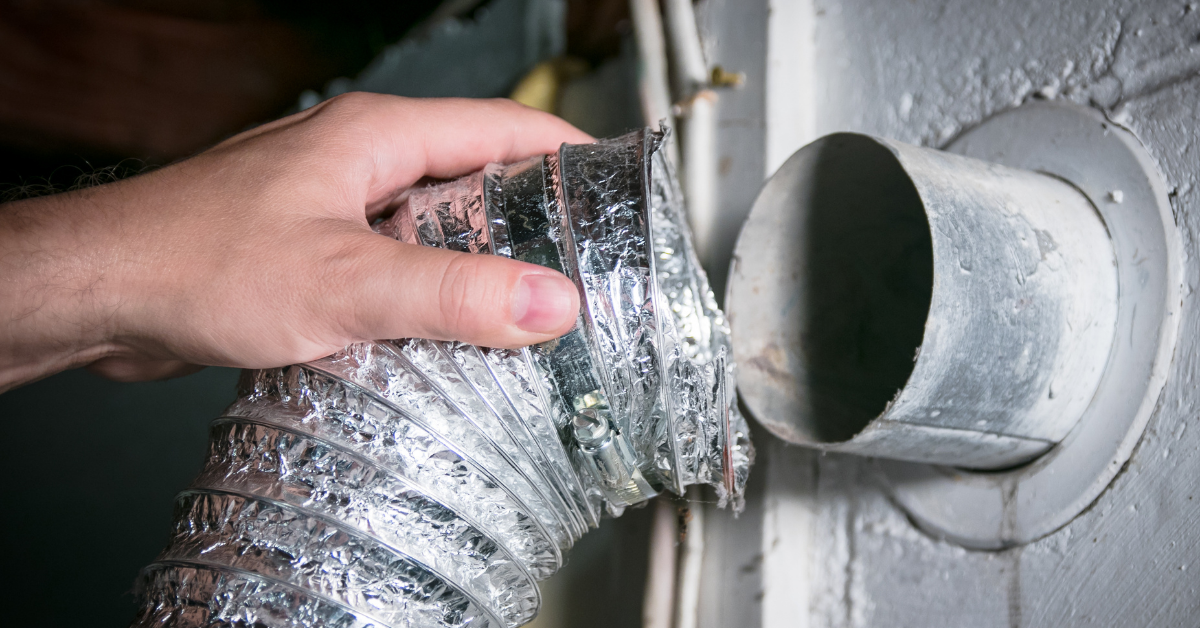
3. Flexible Foil Dryer Vent
The flexible foil duct is lightweight and easy to bend around obstacles. This may make it appear like a convenient, low-cost option for connecting a dryer.
However, its corrugated interior can collect lint more readily than smooth-wall metal duct. It can also become crushed behind the appliance or develop bends that restrict exhaust airflow.
Some manufacturers specifically prohibit foil transition ducts for their dryers. Homeowners should not assume that a flexible foil product is acceptable simply because it is sold as dryer vent material.
Before using any transition product, check whether it is specifically listed for dryer use and permitted by the appliance manufacturer and local requirements.
4. Plastic or Vinyl Dryer Vent
Plastic and vinyl ducts should not be used for conventional residential dryer exhaust systems. They do not provide the same heat resistance and durability as appropriate metal ductwork.
Their flexible construction can also create restrictions and areas where lint accumulates. Using unsuitable plastic ducting can increase fire and ventilation risks.
When replacing an older installation, plastic or vinyl material should be assessed and replaced with an appropriate metal exhaust system.
Rigid Metal vs. Semi-Rigid Metal: Which Should You Choose?
These two materials are often confused because both can be used in dryer ventilation systems, but they have different purposes.
| Feature | Rigid metal | Semi-rigid metal |
| Main purpose | Permanent exhaust duct | Approved transition connection |
| Interior | Smooth | Often corrugated |
| Flexibility | Low | Moderate |
| Resistance to crushing | Generally high | Depends on product and installation |
| Typical location | Wall, ceiling, or accessible duct route | Short connection behind dryer |
For most homes, rigid metal is the better choice for the permanent exhaust route. A suitable semi-rigid metal transition duct may be used between the appliance and the main duct when approved by the manufacturer and local code.
The important point is not to substitute one material for another without checking its intended use.
What to Check Before Choosing a Dryer Vent Material
Before purchasing ductwork, consider the following installation details.
1. Check Your Dryer Manufacturer’s Instructions
Different dryer models can have specific requirements for vent diameter, transition material, maximum duct length, and installation configuration.
Start with the manufacturer’s installation manual instead of assuming that every dryer accepts the same type of flexible connection.
2. Measure the Duct Route
Measure the distance from the dryer connection to the exterior termination. Include the direction changes and elbows in your assessment.
A long route with several sharp bends may create more resistance than a shorter, direct installation. The maximum permitted length depends on the applicable code, fitting adjustments, and appliance instructions.
3. Consider the Installation Location
A duct installed behind a dryer needs to withstand movement and limited clearance. A permanent duct inside a wall or ceiling needs to maintain its shape without being compressed.
If the duct passes through an unconditioned attic or another space outside the home’s conditioned area, insulation may also be required by the applicable local rules.
4. Check Connections and Support
A good duct material can still perform poorly when connections are loose or sections sag.
The duct should be properly supported, mechanically secured, and sealed using approved materials. Screws or fasteners that protrude into the airflow path can catch lint and should be avoided.
Common Dryer Vent Material Mistakes Homeowners Should Avoid
Some installation mistakes are easy to overlook but can affect the entire ventilation system.
One common mistake is using ordinary plastic or vinyl duct because it is inexpensive. Another is installing long lengths of corrugated flexible foil material where smooth metal duct is required.
Homeowners may also use the wrong diameter, squeeze the transition duct behind the dryer, or install unnecessary elbows to make the connection fit.
Adding a screen over the exterior vent opening is another mistake. Lint can collect on the screen and restrict exhaust airflow. A suitable exterior termination should use an appropriate backdraft damper without a restrictive screen.
If an existing duct has been installed using unsuitable materials, replacing only the visible section may not solve the problem. The entire accessible exhaust route should be assessed.
When Should You Replace Your Existing Dryer Vent?
An older duct may need replacement when it shows visible corrosion, crushing, holes, loose connections, or repeated airflow restrictions.
You should also consider an inspection if clothes take longer to dry, the dryer becomes unusually hot, lint collects around connections, or the exterior vent releases weak airflow.
For homes with older flexible ductwork, a professional assessment can help determine whether the material is suitable or whether a rigid metal replacement is needed.
United Home Services provides dryer vent installation services in DFW, including inspection of existing ductwork, repair of damaged sections, and replacement of unsuitable vent systems.
Frequently Asked Questions
1. What is the safest material for a residential dryer vent?
Rigid metal duct with a smooth interior is generally preferred for permanent residential dryer exhaust systems. The short transition connection should use a product specifically listed and approved for dryer use.
2. Can I use a flexible foil duct behind my dryer?
Only if the specific product is approved for that dryer and permitted by applicable requirements. Many manufacturers prohibit ordinary foil transition duct. A listed metal transition product is a better option when allowed by the installation instructions.
3. Is an aluminum dryer vent better than plastic?
Appropriate metal duct is the correct choice for conventional residential dryer exhaust. Plastic and vinyl ducts should be avoided because of their heat resistance, durability, and lint-related safety concerns.
4. How long can a dryer vent duct be?
There is no single maximum that applies to every installation. Under the 2021 International Residential Code’s prescriptive method, the maximum is generally 35 feet, with reductions for certain elbows. Manufacturer instructions and locally adopted code provisions may establish different requirements.
5. Does dryer vent material affect drying time?
Yes. A crushed, excessively corrugated, or poorly installed duct can restrict exhaust airflow. This can make moisture removal less effective and increase drying time.
6. Should dryer vent ductwork be insulated?
Insulation may be necessary when ductwork passes through an unconditioned area, depending on local requirements and the installation conditions. It can help reduce condensation concerns, but it does not replace the need for appropriate metal ductwork and proper installation.
7. How often should dryer vent material be inspected?
Inspect the visible transition duct and exterior termination periodically. A professional inspection is especially useful when drying times increase, airflow weakens, or the duct has not been checked for an extended period. Cleaning frequency should depend on usage, duct length, and the amount of lint accumulation.
Final Thoughts
Choosing the right dryer vent material is about more than finding a duct that fits behind your appliance. The material must be suitable for dryer exhaust, compatible with the manufacturer’s instructions, and installed in a way that maintains reliable airflow.
For most residential homes, rigid metal duct is the preferred option for permanent exhaust runs, while an approved metal transition duct connects the dryer to the main system. Avoid unsuitable plastic, vinyl, and unapproved flexible materials.
If your existing dryer vent is damaged, crushed, or made from the wrong material, a professional inspection can help determine whether repair or complete replacement is the better solution. United Home Services provides dryer vent solutions for homeowners throughout the Dallas–Fort Worth area.